Start with the work
Begin with the process, decision or problem people already understand. The technology comes after the reason it exists.
Teaching & enablement
It is finished when the people using it understand what changed, why it changed, and what to do when something goes wrong. Teaching, documentation and handover have been part of my work for years — not an extra step at the end.
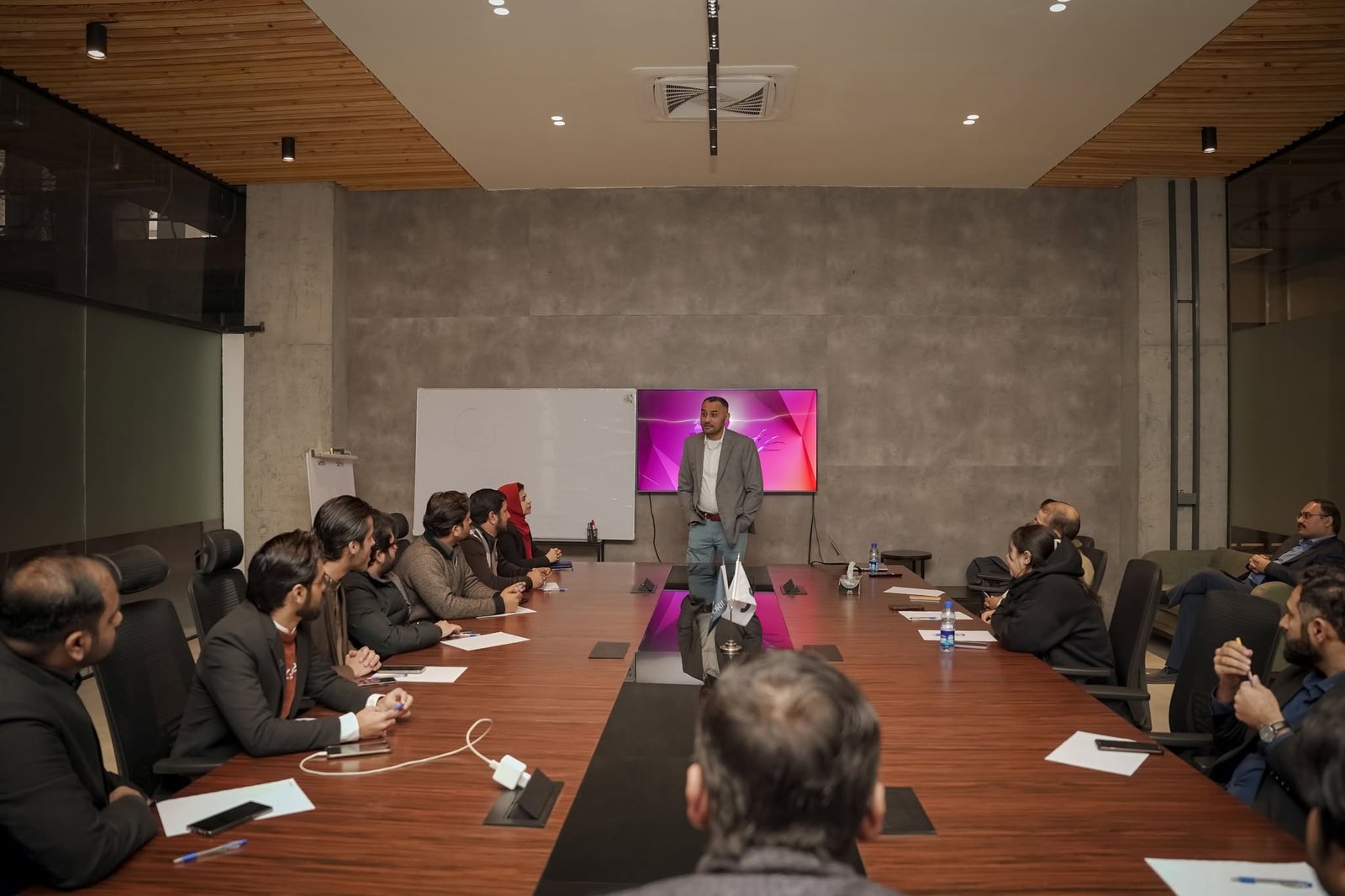
In the room
Years of live teaching shaped how I communicate in technical work today: make the idea clear, connect it to the audience's work, and leave people able to use it without you in the room.


How I teach
I learned this in rooms where technical shorthand would lose the audience in minutes. The same discipline matters in architecture workshops, stakeholder conversations and technical handover.
Begin with the process, decision or problem people already understand. The technology comes after the reason it exists.
Technical accuracy matters, but complexity should not be used as proof of expertise. Explain the idea in the simplest language that remains correct.
People engage differently when the example looks like their own workflow, their own numbers, and the decisions they actually have to make.
A useful session should leave behind a model, runbook, checklist or way of thinking that still works after the meeting ends.
Where this shows up now
A good solution architect has to move between technical depth and shared understanding. The system may be complex; the conversation around it should not be.
Ask enough questions to understand the process, users, constraints and data before turning the conversation into a technology recommendation.
Why this platform? Why this data model? What does the decision simplify, and what does it make harder? People support architecture better when they understand the reasoning.
Demos make more sense when they follow the way people actually work instead of walking feature by feature through the technology.
Runbooks, operating notes and training reduce dependence on the original builder. I treat that as part of the architecture, not post-project cleanup.
The teaching chapter
During my independent consulting years I ran live cohort training for more than 1,000 practitioners across 12 countries. The subject was business performance, analytics and using their own numbers to make better decisions.
Most of the audience was not technical. Many were working in a second language. That forced me to learn something useful: if people cannot follow the explanation, adding more detail usually makes it worse.
Today the same skill shows up differently. It helps when I explain a data model to a business stakeholder, walk users through a new application, document an operational process, or explain why an architecture decision matters beyond the technology itself.
What good handover looks like
Enough context to understand the major components, dependencies and design decisions without reverse-engineering the system.
What runs, when it runs, what success looks like, where failures appear, and what the first response should be.
Users do not need the same explanation as administrators, analysts or developers. Teach each group what it actually needs to operate well.
Document the assumptions and boundaries so the next person knows what can change safely and what deserves another architecture discussion.
Writing is the same discipline
My technical writing follows the same approach: production context first, architecture decision second, trade-offs left in.